
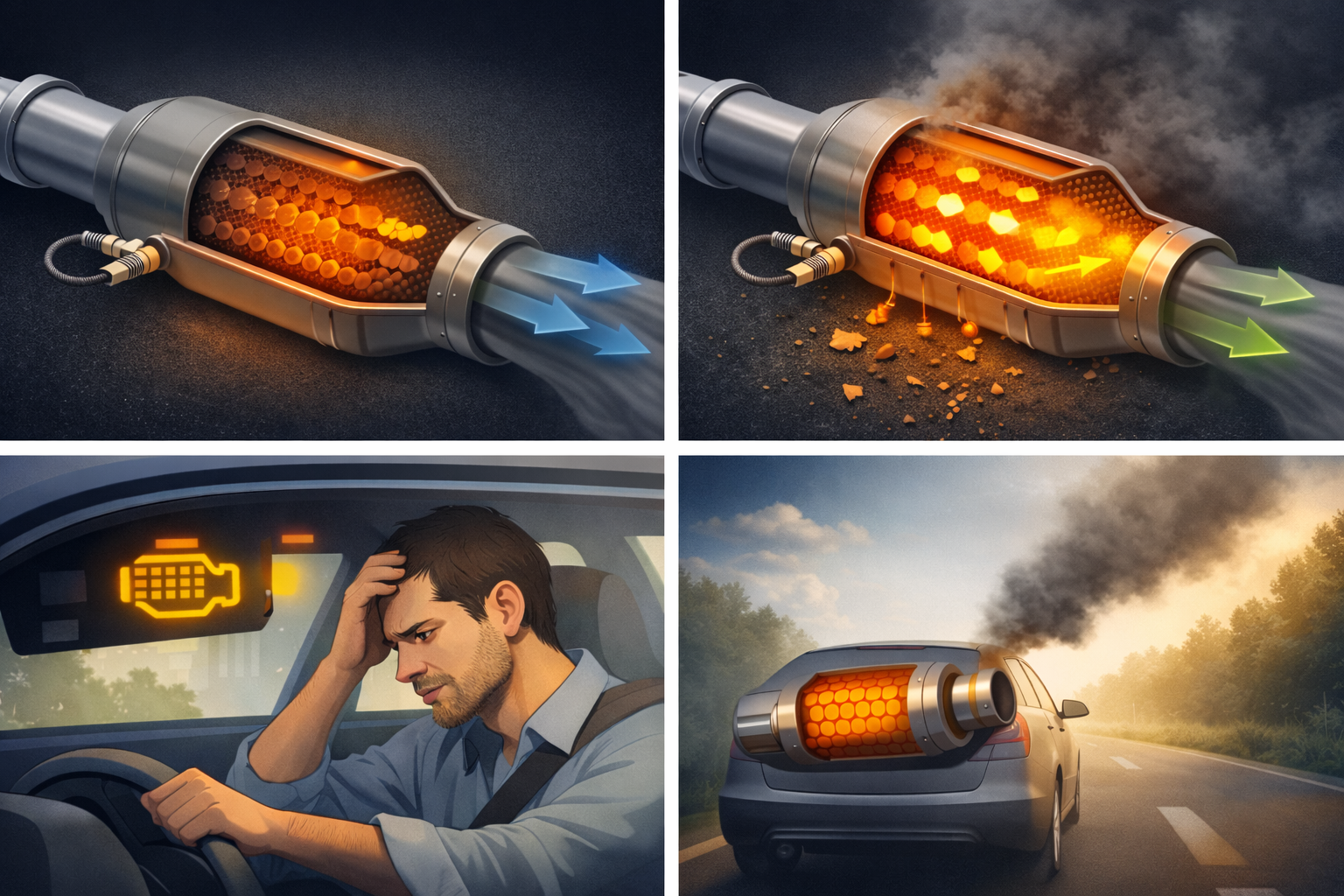
7 Things Worth Knowing About the DPF Filter – Facts That Help You Take Better Care of a Diesel Car
The DPF (diesel particulate filter) is one of those components in a diesel-powered car that many drivers only think about when a problem appears. In reality, however, proper DPF operation depends largely on driving style, operating conditions, and whether the driver understands what is happening in the car during the regeneration process. Manufacturers clearly point out that frequent short trips and interrupted regeneration can make proper filter cleaning more difficult and, in extreme cases, may lead to clogging.
What exactly is a DPF?
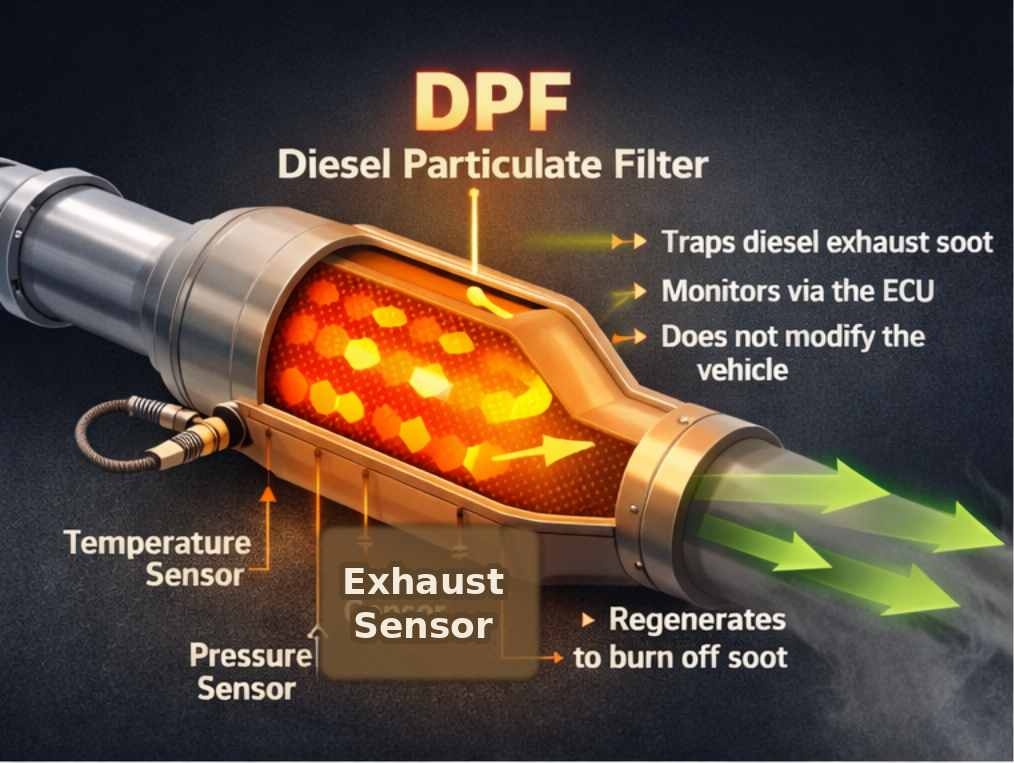
The DPF, or diesel particulate filter, is responsible for capturing soot generated during diesel engine operation. In order for the filter to function properly, the accumulated soot must be regularly burned off during the active regeneration process. That is why, in everyday driving, the DPF is not truly a “maintenance-free” component — its condition depends not only on the car itself, but also on how the vehicle is used.

1. The biggest DPF problem is often not the failure itself, but the driving style
Many drivers use a diesel car mainly for short trips: to work, the store, school, or around town. Under these conditions, the engine and exhaust system often do not reach the optimal parameters needed for effective filter regeneration. If the car is regularly driven on short routes, the soot burn-off process may be interrupted or postponed, which gradually increases the load on the filter. Manufacturers and service materials point to short trips and low speeds as some of the most common reasons why regeneration is not completed properly.
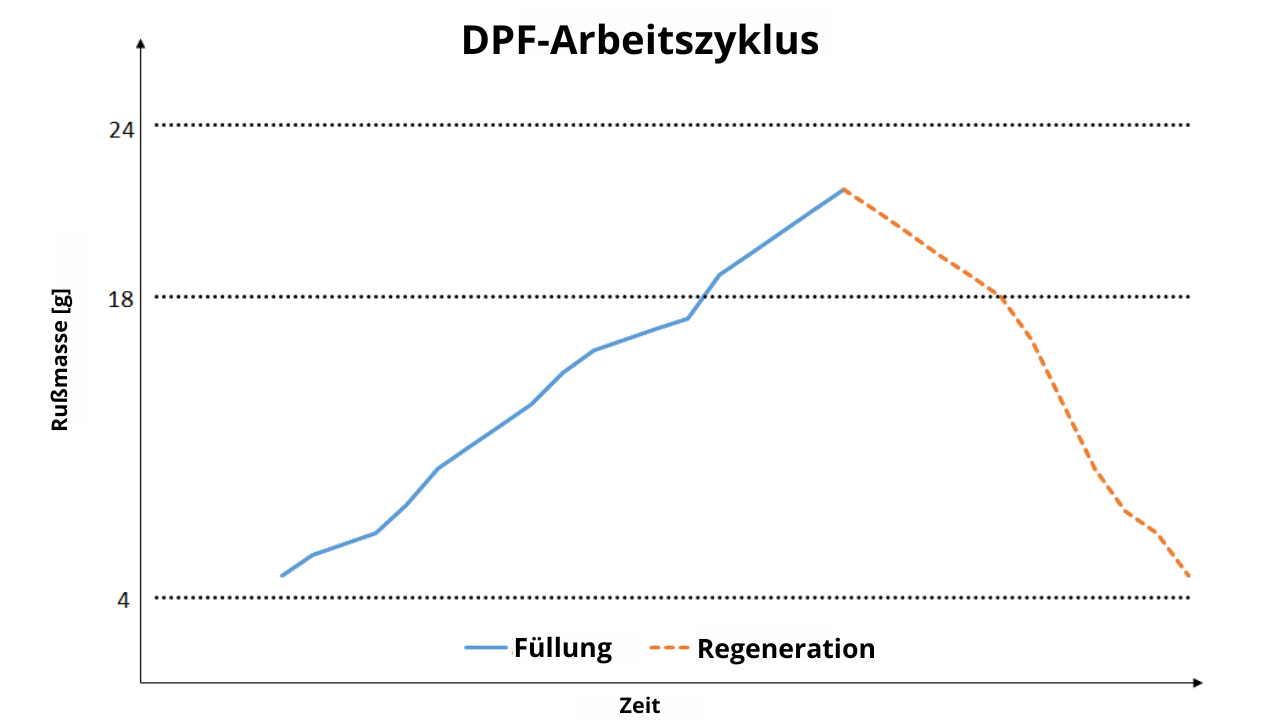
Understanding the DPF Work Cycle (Chart Explanation)
- Phase 1: Soot Accumulation – The filter captures soot particles during normal everyday driving.
- Phase 2: Regeneration Trigger – Once soot reaches a critical level, the engine control unit initiates the cleaning process.
- Phase 3: Active Regeneration – Exhaust temperatures are artificially raised to safely burn off the accumulated soot.
- Phase 4: Clean Filter – The soot is turned into a minimal amount of ash, the filter is cleared, and the cycle begins anew.
2. Interrupted regeneration may mean repeated regeneration attempts
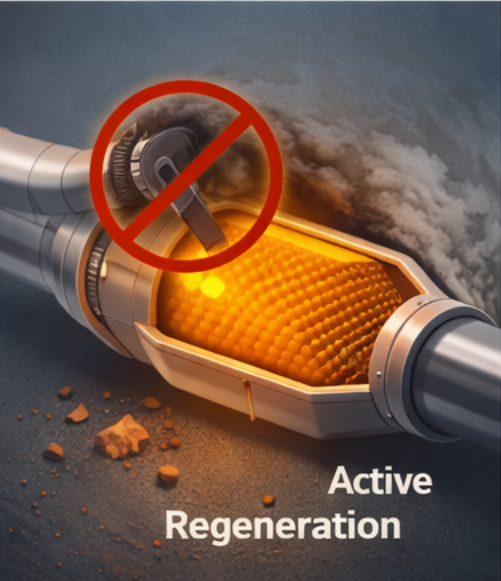
When active regeneration is interrupted, the car usually attempts the process again at the next opportunity. From the driver’s perspective, this means that the system returns to the same task repeatedly instead of completing it the first time. That is why conscious driving during regeneration matters — allowing the process to finish under the right conditions is more beneficial than having it start over again and again.
3. A DPF usually does not “fail suddenly” without warning signs
Problems with the diesel particulate filter usually build up gradually. First, regenerations may start to occur more frequently, then the car may begin to behave differently than usual, and only later do warning messages or limp mode appear. For many drivers, the biggest difficulty is therefore not the filter itself, but the lack of information about when regeneration has started and whether it has been completed. DPF monitoring devices are designed precisely to make this process easier for the driver to understand. On DPF-Kontrolle.de, the product is presented as a DPF monitoring device that works via OBD2 and informs the driver about the start and end of regeneration, without interfering with the ECU.
4. Conscious vehicle use may reduce the risk of DPF-related problems
This should be said clearly: no monitoring device removes the natural wear of vehicle components or replaces proper servicing. However, it can help the driver better understand what is happening in the car. And that matters, because when the driver knows that regeneration is in progress, they can avoid switching off the engine immediately or constantly interrupting the process. This type of information does not “repair” the DPF, but it may support more conscious vehicle use.
5. A clogged DPF is not only a problem for the filter itself
When the filter is heavily loaded with soot, the consequences may go beyond the DPF alone. The exhaust system, sensors, and indirectly the general operation of the engine begin to work under less favorable conditions. For this reason, problems with the diesel particulate filter should not be ignored. Manufacturers warn that long-term neglect of the regeneration process may ultimately result in the need for professional cleaning or filter replacement.
6. Not every driver needs to be a mechanic, but it is worth understanding the basics
Many diesel vehicle users do not want to analyze diagnostic parameters, temperatures, or soot load values. That is completely normal. A driver does not need to be a diagnostic specialist in order to use the car sensibly. In practice, the most important thing is understanding a few basics: what regeneration is, why it should not be constantly interrupted, and when the car needs time to complete the filter cleaning process. The simpler and clearer this information is, the easier it is to apply it in everyday driving. This is exactly the idea behind the way DPF Control is presented on our website.
7. The DPF is not the driver’s enemy — the bigger problem is often the lack of information
A lot of frustration has grown around diesel particulate filters, but the DPF itself is not the “villain.” It is simply a component with specific operating requirements. When a driver does not know that regeneration is taking place, it becomes easy to interrupt the process unintentionally. When they understand what regeneration means and how the car behaves during it, it becomes much easier to avoid unnecessary operating mistakes. That is why the most important thing is not the electronics alone, but the information that helps the driver make better decisions.
Summary
The DPF does not require miracle solutions — it requires conscious vehicle use and an understanding of when and why regeneration takes place. Short trips, frequent interruption of regeneration, and lack of awareness about how the system works can increase the risk of problems. On the other hand, a better understanding of what happens during regeneration can help drivers use their vehicles more consciously and with greater peace of mind.