
DPF Control – how does a DPF regeneration monitoring device work?
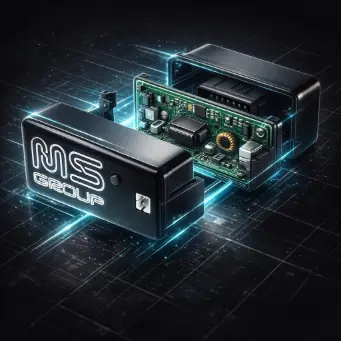
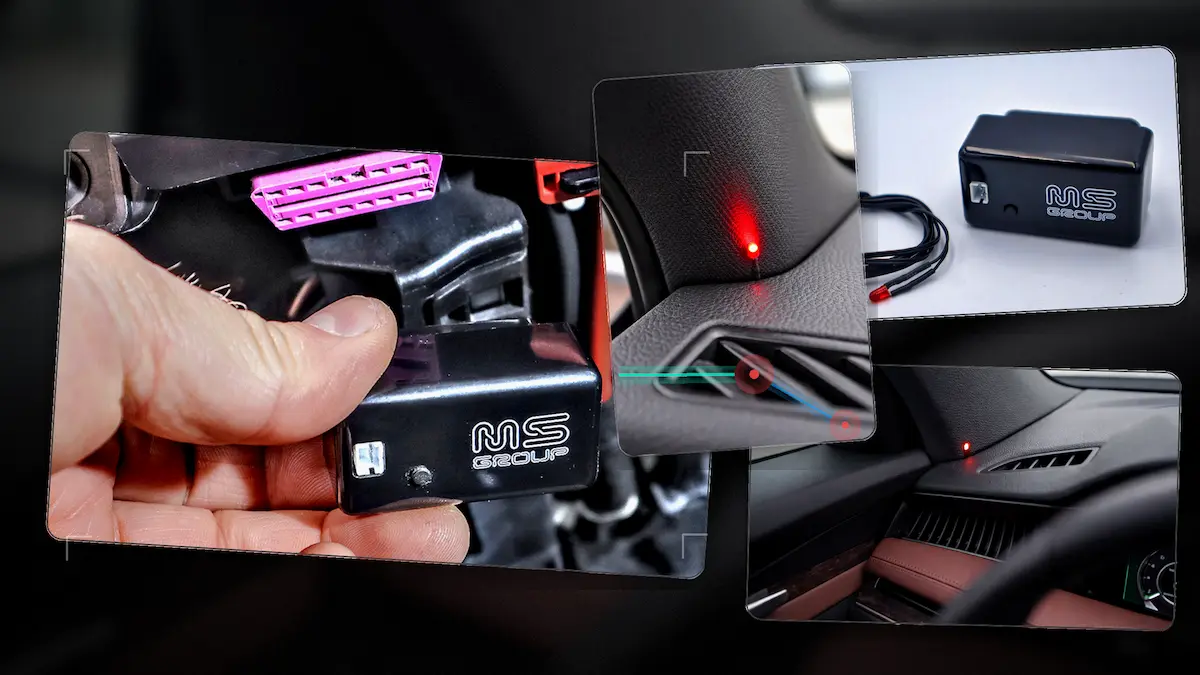
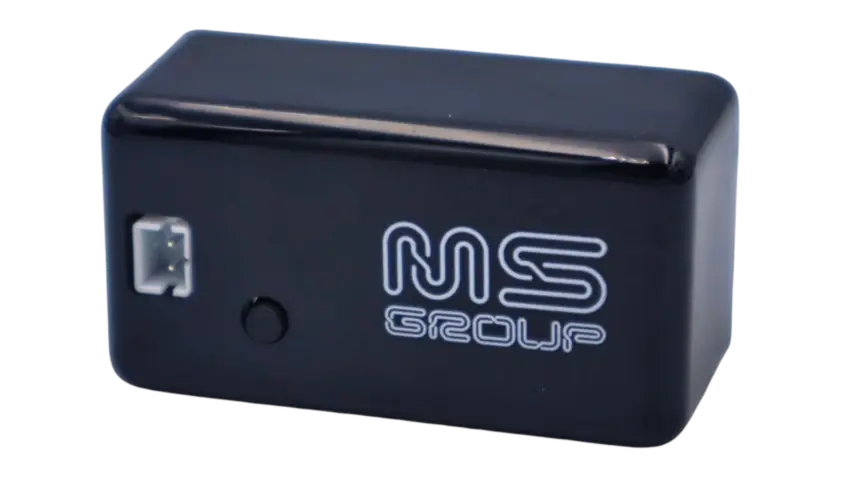
DPF Control is a device for monitoring DPF regeneration that informs the driver in real time when the diesel particulate filter regeneration starts and when it ends. Connected directly to the OBD2 port, it operates automatically and does not require an app or any modification to the vehicle software.
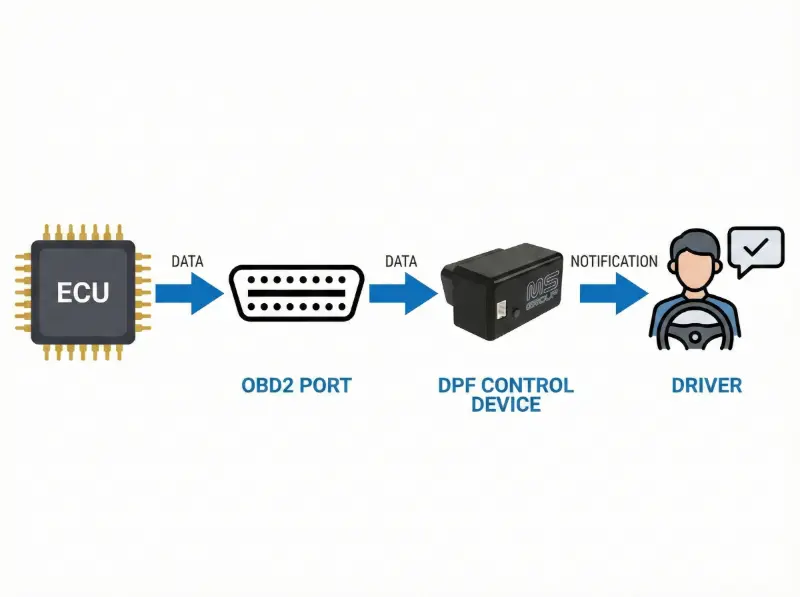
The device analyzes data sent by the engine control unit (ECU) and signals the DPF burn-off process using an LED indicator and an audible beep. This way, the driver knows exactly when regeneration is in progress and can continue driving without interrupting the cycle.
What is DPF Control?
DPF Control is a standalone DPF control device designed for diesel drivers. Its purpose is to monitor the diesel particulate filter regeneration status without a diagnostic computer or a mobile app.
The device works in plug-and-play mode — simply connect it to the OBD2 port. It does not change engine parameters and does not interfere with the ECU. In everyday use, it acts as an intelligent DPF regeneration monitor (OBD2 DPF).
How does DPF Control work step by step?
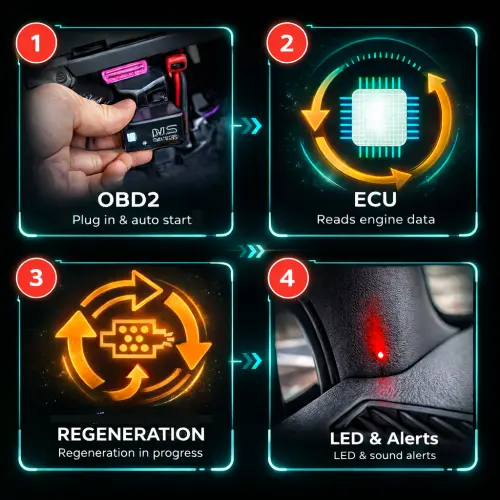
Connection to OBD2
Simply plug the device into the OBD2 diagnostic port. After the engine starts, DPF Control activates automatically.
Reading data from the ECU
The device analyzes parameters sent by the engine control unit (ECU), including the DPF regeneration status and signals related to the filter burn-off process.
DPF regeneration detection
When active regeneration begins, the diesel particulate filter enters a soot burn-off mode. DPF Control recognizes this status in real time.
LED and sound indication for the driver
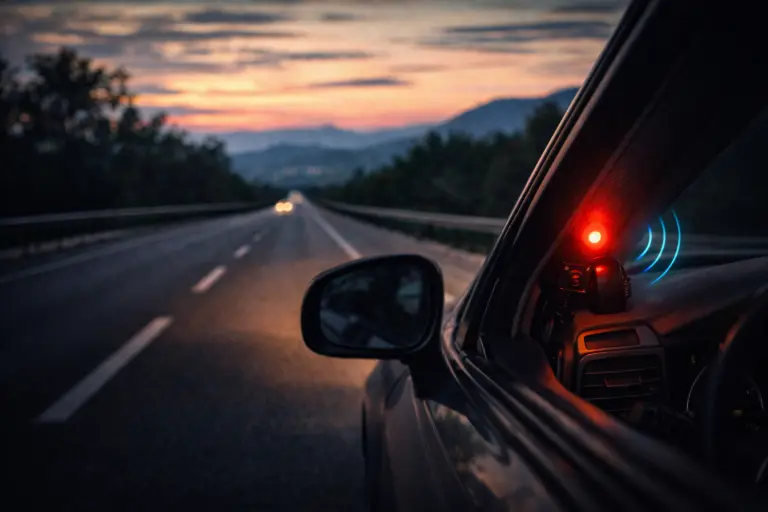
The start of regeneration is indicated by an LED signal and an audible beep. The end of the process is confirmed with a separate signal.
How does DPF Control know that DPF burn-off is in progress?
The engine control unit (ECU) continuously manages the DPF regeneration process and stores its current DPF status in the vehicle’s diagnostic system. DPF Control reads this information through the OBD2 connection.
When the ECU activates the filter burn-off procedure, the device detects the change in regeneration status and immediately informs the driver. After regeneration ends, the indication switches off.
DPF Control does not start regeneration — it only monitors a process initiated by the car.
Why is it worth monitoring DPF regeneration?
Interrupting DPF regeneration is one of the main causes of DPF problems. Switching the engine off during the burn-off process can lead to:
- more frequent regenerations,
- higher fuel consumption,
- increased engine load,
- a higher risk of a clogged DPF filter.
DPF Control helps you finish regeneration consciously, reducing the risk of costly repairs. Even a diesel car used mainly on short trips can be driven more responsibly to extend the service life of the DPF. When you know when regeneration is happening (or should happen), you can plan your route so the process completes without interruption — and then forget about the DPF until the next cycle.
DPF Control is a practical partner and a must-have for any diesel driver with a particulate filter.
Does DPF Control interfere with the car?
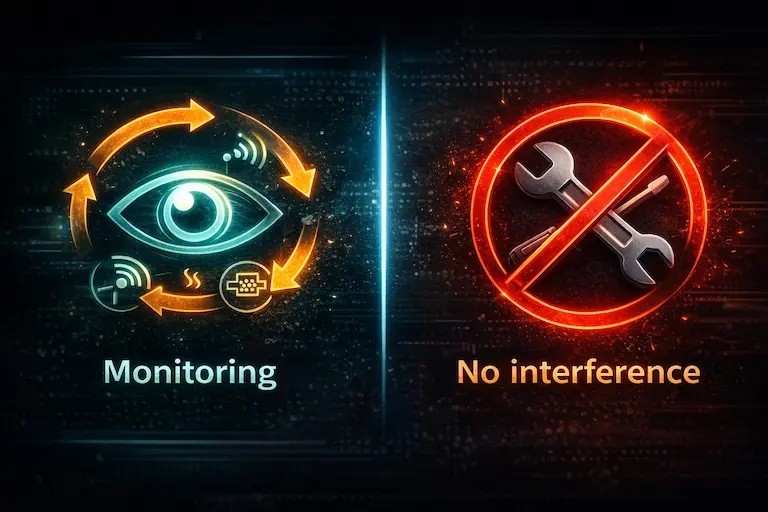
No. DPF Control is a monitoring device — it does not interfere with vehicle systems. It is an independent unit, not a diagnostic or programming computer. Its role is to read and interpret signals from the ECU that relate only to the operation of the diesel particulate filter (DPF).
DPF Control does not:
- change engine maps,
- affect the operation of other vehicle systems,
- modify ECU software,
- force regeneration.
The device only reads available diagnostic data and informs the driver about the current DPF burn-off status.
FAQ – frequently asked questions about DPF Control
Q Does DPF Control force DPF regeneration?
A No. The device only monitors regeneration initiated by the ECU.
Q Does it work without an app?
A Yes. It does not require a phone or any additional software.
Q Can I leave the device connected permanently?
A Yes. DPF Control can be used as a permanent DPF regeneration monitor.
Q Does it work in every car?
A Compatibility depends on the vehicle model and its diagnostic system.
More questions and answers about DPF Control and how it works can be found here: DPF Control – FAQ section .
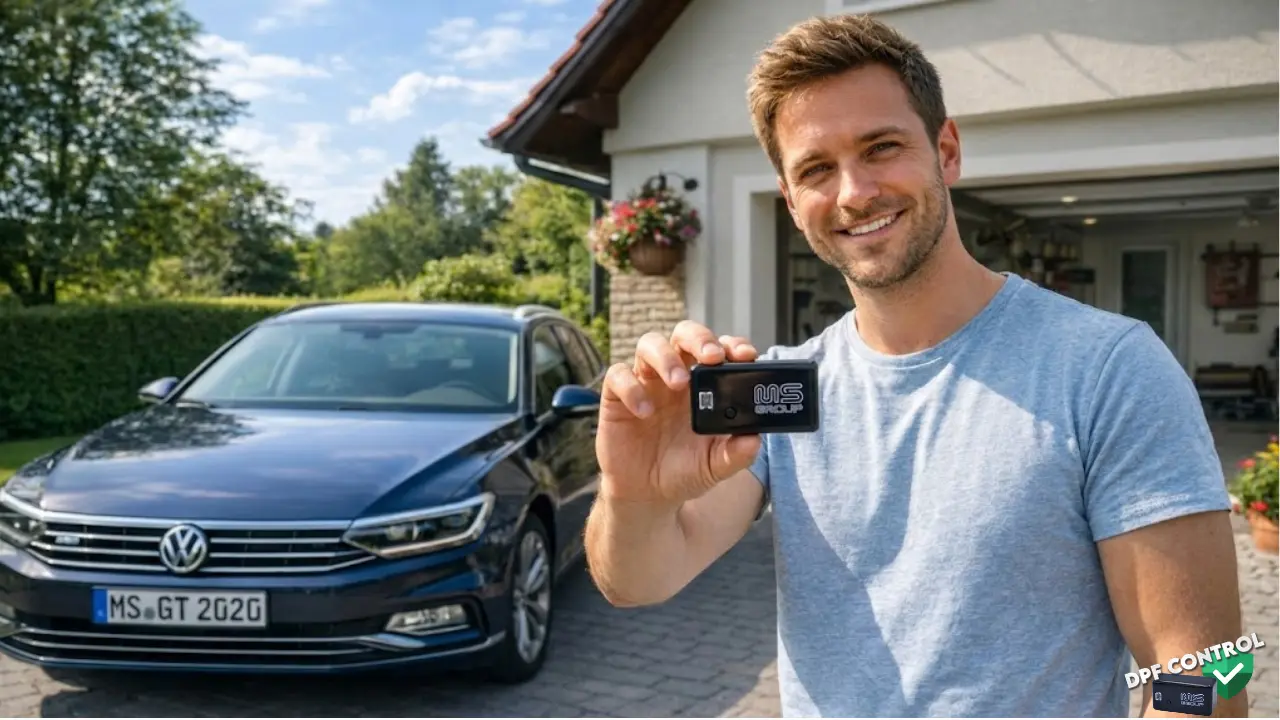 DPF Control – OBD monitoring device
