DPFCONTROL.EU · DIESEL PARTICULATE FILTER GUIDE
How to Tell If Your DPF Is Regenerating
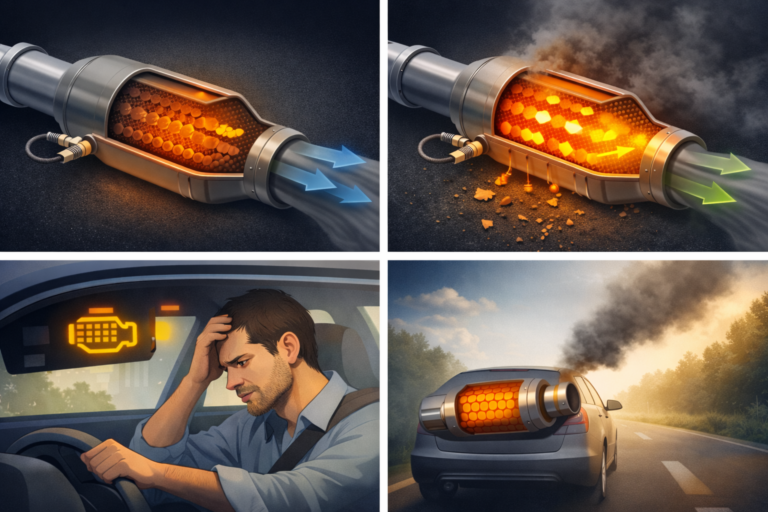
Many diesel cars do not give the driver a clear dashboard message when an active DPF regeneration begins. A slightly higher idle speed, increased fuel consumption, running cooling fans or an unavailable Start/Stop system may suggest that the diesel particulate filter is cleaning itself—but these signs vary by vehicle and none is conclusive on its own.
If you want to know how to tell if your DPF is regenerating, look for several changes occurring together: higher idle speed, temporarily higher fuel use, a different engine or exhaust note, cooling fans and disabled Start/Stop. For a clearer indication in a compatible vehicle, DPF Control monitors the process through the OBD2 port and signals when active regeneration starts and when it finishes.

REGENERATION IN NORMAL DRIVING
7 Possible Signs Your DPF Is Regenerating
During active regeneration, the engine control unit changes operating conditions to raise exhaust temperature and oxidise the soot stored in the filter. Depending on the engine, transmission, outside temperature and driving conditions, you may notice some of the following DPF regeneration symptoms.
Higher Idle Speed
The engine may idle slightly faster than usual when the car is stationary. Warm-up, electrical demand and climate control can also raise idle speed, so treat this only as a clue.
Higher Fuel Consumption
Instantaneous fuel consumption may rise temporarily because the engine management system is creating the exhaust temperature required for active DPF regeneration.
Cooling Fans Running
The radiator fans may run faster during regeneration or continue after the engine is switched off. Air conditioning and normal engine cooling can produce the same symptom.
Start/Stop Unavailable
Some vehicles temporarily disable automatic Start/Stop so the engine is not switched off while the exhaust aftertreatment system is managing a regeneration cycle.
Different Engine or Exhaust Note
The engine, cooling fans or exhaust may sound different. An automatic gearbox may also hold a different gear or engine speed, depending on the vehicle strategy.
Heat, Smell or Clicking
At low speed you may notice more heat, a hot metallic smell or occasional clicking from the exhaust area. Keep away from dry grass and other combustible materials.
Vehicle-Specific Message
Some vehicles show an exhaust-cleaning message or regeneration status. Many passenger cars do not, which is why drivers often have to interpret indirect signs.
Important: no single symptom proves that regeneration is in progress. The same signs can be caused by engine warm-up, air conditioning, battery charging or ordinary thermal management. Look for a combination of changes—or use a compatible DPF regeneration monitor for direct confirmation.
UNDERSTANDING THE PROCESS
Active, Passive and Forced DPF Regeneration
The word “regeneration” is often used as if it described one identical event, but there are important differences. The noticeable signs in this article mainly concern active regeneration during normal driving.
Passive Regeneration
Soot oxidises when exhaust conditions are naturally favourable, often during sustained driving. The driver may notice nothing at all.
Active Regeneration
The ECU deliberately raises exhaust temperature when its calculated filter load and operating conditions require a cleaning cycle.
Forced Regeneration
A procedure started through a manufacturer-approved vehicle function or suitable diagnostic equipment, often in a workshop, when normal regeneration cannot be completed. It is not the same as everyday automatic regeneration.
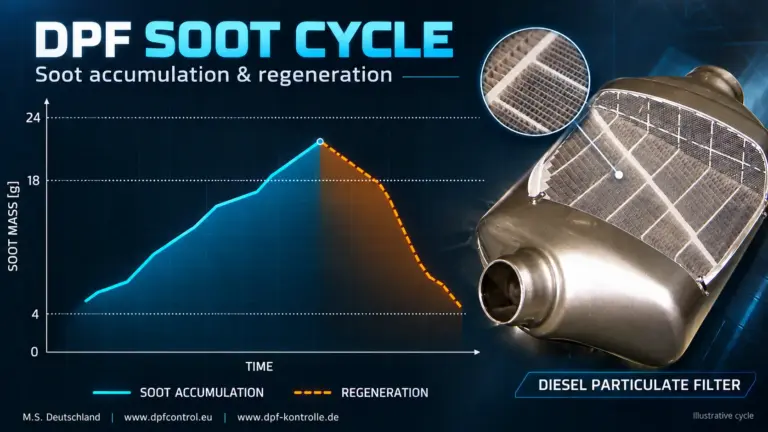
In normal driving the DPF traps soot. The ECU estimates the soot load using sensor data and calculation models. When the required conditions are met, active regeneration raises the temperature in the exhaust system and oxidises the accumulated soot. Regeneration does not remove non-combustible ash; ash remains in the filter and builds up over time.
CLEAR INFORMATION THROUGH OBD2
How DPF Control Detects and Signals Active Regeneration
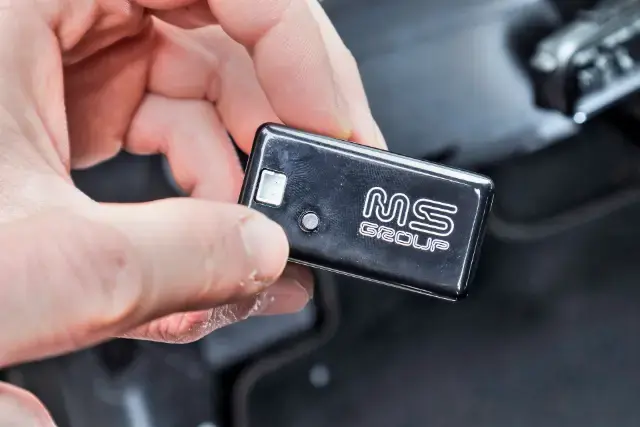
DPF Control was designed to close the information gap left by many instrument clusters. Once connected to the OBD2 port of a compatible vehicle, the device automatically monitors relevant data made available by the engine control unit. There is no need to open an app before every journey or interpret a live-data screen while driving.
Regeneration Begins
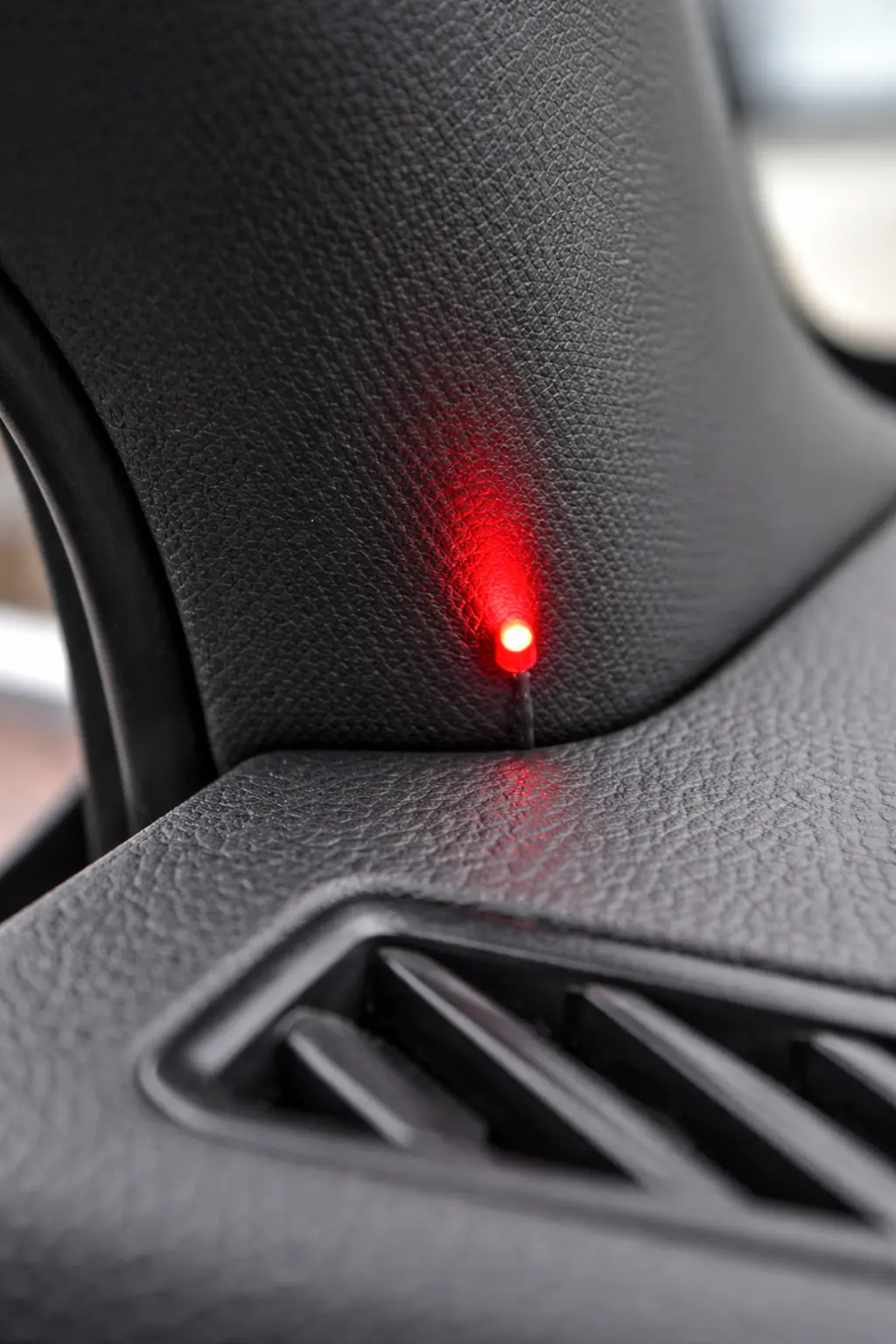
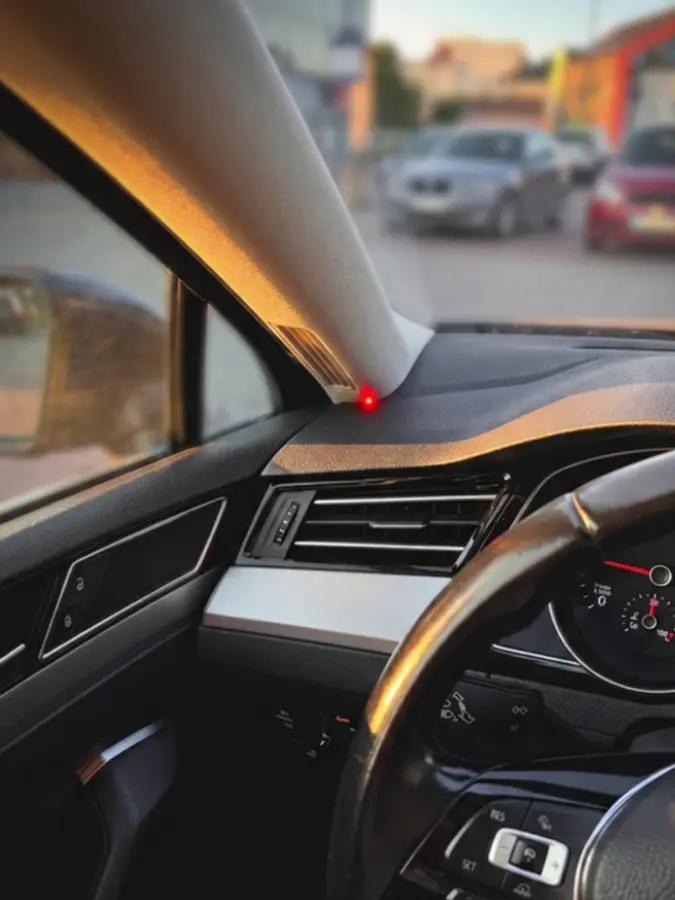
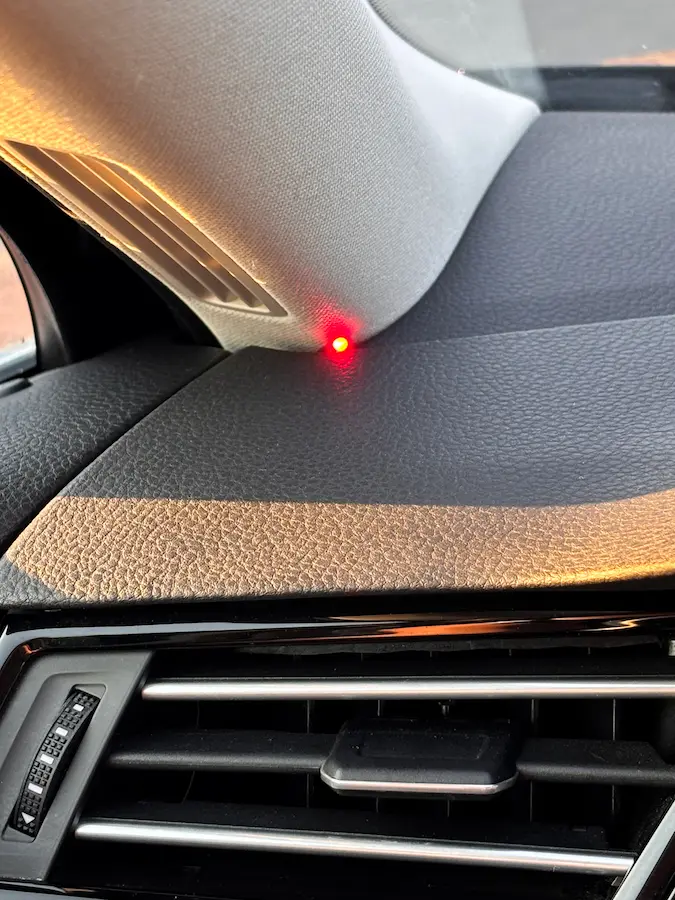
When active regeneration is detected through supported ECU data, DPF Control provides a clear visual indication through the connected LED and, when sound alerts are enabled, an acoustic signal. The driver no longer has to rely only on idle speed, fan operation or fuel-consumption changes.
Regeneration Finishes
When the process is complete, the device signals the end and the regeneration LED goes out. That makes it easier to avoid ending a journey purely by guesswork.
On supported vehicle and ECU combinations, DPF Control can also help the driver check the calculated soot load between cycles. Availability depends on the selected device version and the data supported by the vehicle, so compatibility should always be checked before purchase. Read more about what the DPF Control OBD2 monitor is and how it fits into everyday diesel use.
If the device signals the beginning but not the end of a cycle, or the displayed calculated soot value does not fall as expected, check the product instructions and contact DPF Control support rather than assuming the vehicle completed regeneration normally.
Choose DPF Control for Your VehicleTHE END OF THE CYCLE
How Do You Know When DPF Regeneration Is Complete?
Without a dedicated display, the end of active regeneration can be just as difficult to recognise as the start. Idle speed and instantaneous fuel consumption may return to normal, Start/Stop may become available again and the engine note may change back. However, the cooling fan can continue running because the exhaust system remains hot, so fan operation alone does not prove that regeneration is still active.
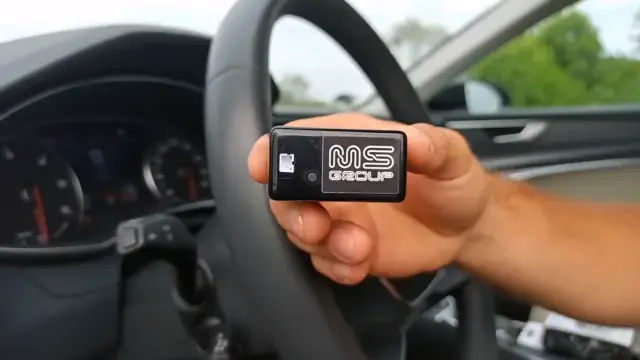
DPF Control provides a clearer indication in compatible vehicles: it signals when the regeneration has ended and switches off the connected regeneration LED. This is useful when the cycle starts shortly before home, work or another destination—a common short-trip scenario in which the process may otherwise be missed.
PRACTICAL DRIVING ADVICE
What Should You Do During Active DPF Regeneration?
There is no universal speed, engine speed or journey duration that is correct for every diesel vehicle. The right procedure depends on the manufacturer, engine, gearbox and warning status. Always follow the owner’s manual for your exact car.
Normal automatic regeneration is controlled by the vehicle and, in many cars, needs no special manoeuvre from the driver. If it is safe and practical, simply continuing a normal, steady journey may give the system time to finish.
Keep Safety First
Do not extend a journey if traffic, fatigue, weather, fuel level or the condition of the vehicle makes it unsafe. Information about regeneration never overrides road safety.
Continue a Normal, Steady Drive If Practical
If conditions are safe, a continued journey with a warm engine and stable operation can give the ECU time to complete its active regeneration strategy.
Do Not Use One “Magic” RPM Rule
Advice such as holding one fixed speed or RPM is not suitable for every car. Use the procedure stated in the vehicle handbook, especially when a DPF warning lamp is illuminated.
Avoid Fire Hazards
The exhaust can become extremely hot during and after regeneration. Do not park or idle over dry leaves, dry grass, fuel spills or other combustible materials.
Do not try to “drive through” a serious fault. If several warning lights are on, the vehicle loses power, enters limp mode, emits unusual smoke or repeatedly fails to regenerate, arrange professional diagnosis instead of attempting another cleaning drive.
INTERRUPTED DPF REGENERATION
Is Switching Off the Engine During Regeneration Harmful?
Switching off the engine once during a running regeneration does not automatically damage the DPF. The control unit can usually attempt another cycle when operating conditions are suitable. Repeatedly interrupting active regeneration is less favourable because part of the soot load may remain and the vehicle may need additional regeneration attempts.
More Soot May Remain
If the cleaning cycle ends early, the target reduction in calculated soot load may not be reached.
Another Attempt May Follow
The ECU may start a new active regeneration later, producing another period of elevated exhaust temperature and temporary extra fuel use.
Short Trips Can Repeat the Pattern
When the engine only reaches suitable conditions near the destination, the driver may unknowingly interrupt one cycle after another.
Abnormal Frequency May Need Diagnosis
Suddenly shorter intervals can be linked to driving conditions, sensor faults, thermostat problems, increased soot production or a heavily loaded filter.
The ceramic filter monolith is engineered for the temperatures of normal regeneration. A heavily soot-loaded or technically faulty system can, however, experience abnormal thermal stress. That is why warning lights, frequent failed cycles and loss of power should be investigated rather than treated as a normal regeneration event.
DO NOT CONFUSE TWO DIFFERENT SIGNALS
Does the DPF Warning Light Mean Regeneration Is in Progress?
Not necessarily. In many vehicles, the DPF warning lamp is not a normal “regeneration active” indicator. It can mean that soot loading has reached a level that requires the driver to follow a manufacturer-specific procedure, or that the system could not complete regeneration under recent driving conditions.
Check the handbook as soon as the light appears. If it remains on, is joined by another warning lamp or the vehicle enters limp mode, professional diagnosis is the correct next step. DPF Control is designed to monitor normal active regeneration; it does not repair a blocked filter, replace fault diagnosis or cancel the need to respond to dashboard warnings.
Useful distinction: a regeneration-status signal tells you what the ECU is doing now. A DPF warning lamp may be asking you to take action because the system has not been able to manage soot loading normally.
DIRECT COMPARISON
DPF Regeneration With and Without DPF Control
Without DPF Control
- The start of regeneration is often only indirectly noticeable.
- The end of the cycle can be difficult to estimate.
- The driver interprets fan speed, idle speed and consumption.
- A journey may end while regeneration is still running.
- Tracking regeneration intervals requires manual observation.
With DPF Control
- The beginning of active regeneration is signalled.
- The end of the regeneration process is signalled.
- No smartphone app needs to be started for each journey.
- The driver can make an informed decision instead of guessing.
- Calculated soot load can be checked where supported.
DPF Control does not change engine maps, inject fuel, start a forced regeneration, control the ECU’s regeneration strategy or modify engine software. Its value is straightforward: it makes an otherwise hidden process visible to the driver. That is especially practical for short-distance use, city traffic, company vehicles and cars shared by several drivers.
WHEN TO INVESTIGATE
Why Is My Car Regenerating More Often Than Usual?
There is no universal regeneration interval. Frequency depends on the engine, route, ambient temperature, load, oil consumption, filter condition and the amount of soot the engine produces. A change in your own car’s normal pattern is usually more informative than comparison with another model.
Very frequent, unusually long or repeatedly interrupted regenerations may justify a technical check. Possible contributors include a high proportion of short journeys, a thermostat that prevents full operating temperature, incorrect differential-pressure or temperature-sensor readings, EGR or injection problems, increased oil consumption, air-path faults or a filter with high soot or ash loading.
DPF Control can help you observe the pattern, but it cannot identify every root cause. Record when cycles occur, how long they last and whether warning lights appear; this information can make subsequent workshop diagnosis more focused.
DPF CONTROL IN DAILY USE
Automatic DPF Monitoring Without a Phone App
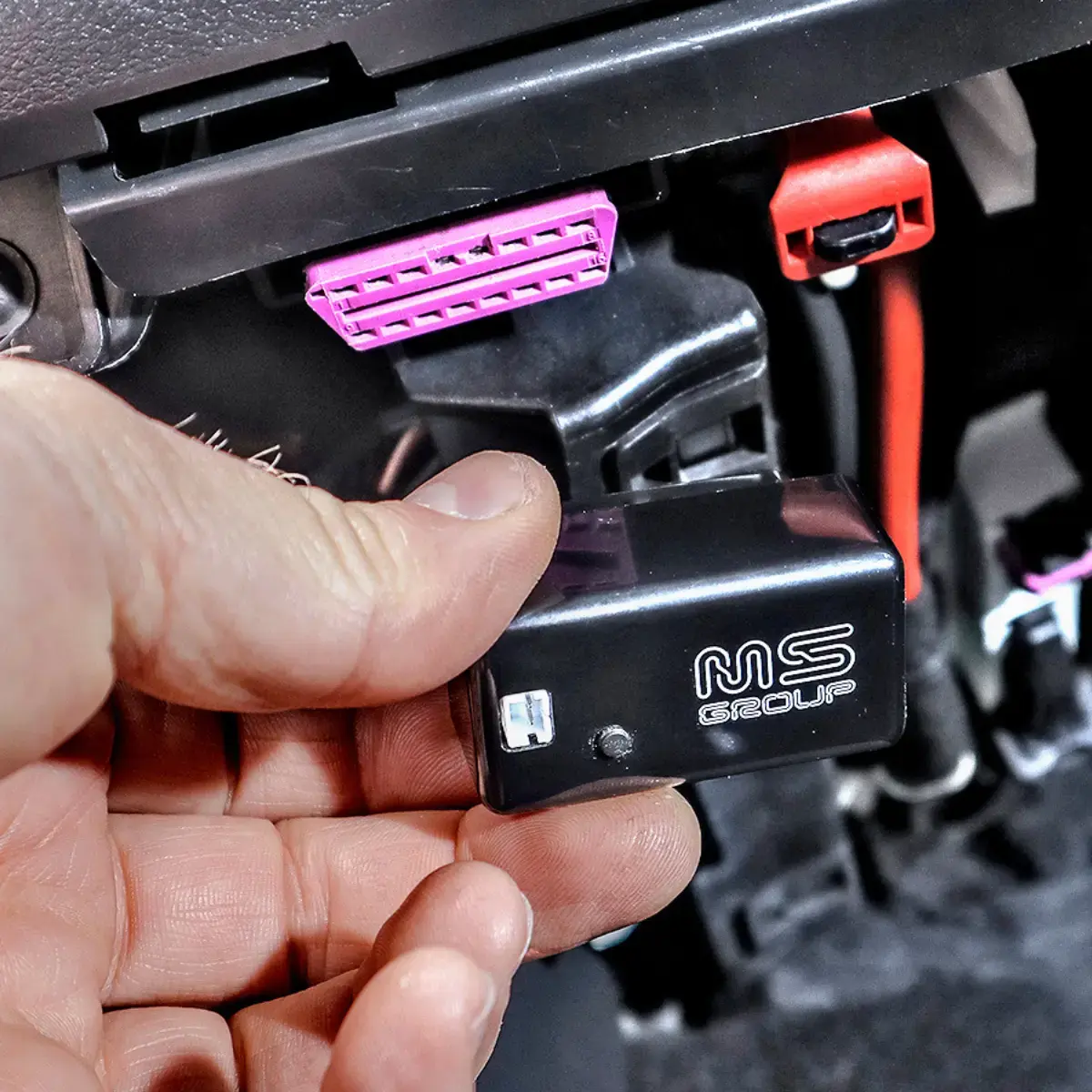
Many smartphone diagnostic apps can display numerous live values, but they require a suitable interface, a connection and deliberate setup. In normal day-to-day use, DPF Control stays in the vehicle and provides an immediate indication through the connected LED plus optional sound alerts for every driver who uses the car. If the vehicle will stand unused for several weeks, follow the product instructions and disconnect the device.
FREQUENTLY ASKED QUESTIONS
How to Tell If Your DPF Is Regenerating – FAQ
How do I know if my DPF is regenerating?
Several signs may occur together: higher idle speed, temporarily increased fuel use, cooling fans, a changed engine note or unavailable Start/Stop. These clues vary by vehicle. DPF Control can provide clearer start and finish signals in compatible vehicles.
How long does active DPF regeneration take?
There is no fixed time for every car. A normal active regeneration often takes roughly 10–30 minutes, but the actual duration depends on soot load, exhaust temperature, engine design and driving conditions. Follow the handbook for your vehicle.
Can I switch off the engine during DPF regeneration?
If safety or your situation requires you to stop, switch off the vehicle normally. One interruption does not automatically damage the filter. Repeated incomplete cycles are less favourable because the ECU may have to attempt regeneration again.
Do I need to drive on a motorway to complete regeneration?
Not always. Many vehicles can complete active regeneration during an ordinary steady drive once the engine and exhaust are warm. The required conditions vary, so do not apply one universal motorway, speed or RPM rule to every diesel.
Does the DPF warning light mean a regeneration is running?
Not necessarily. It often means the filter load needs attention or a previous regeneration could not complete. Read the vehicle handbook promptly. If the lamp stays on, other warnings appear or performance drops, arrange diagnosis.
Why do the cooling fans run after I switch off the engine?
The exhaust and engine bay may remain hot after regeneration, so the fans can continue. Air conditioning and normal thermal management can do the same, which is why running fans alone are not proof of DPF regeneration.
Does DPF regeneration remove ash from the filter?
No. Regeneration oxidises combustible soot. Non-combustible ash remains in the DPF and accumulates with mileage and oil consumption; eventually the filter may require manufacturer-approved servicing or cleaning, or replacement.
Can DPF Control force or start a regeneration?
No. The engine control unit decides when active regeneration begins. DPF Control monitors information available from the vehicle and alerts the driver; it does not start forced regeneration or modify engine software.
Can DPF Control show the soot level?
The calculated soot load can be checked where the selected DPF Control version and the vehicle’s ECU support that data. Compatibility and available functions must be verified for the exact model and engine.
Why is my diesel regenerating more often than before?
A change can result from more short journeys, colder conditions or repeated interruptions, but it can also point to sensor, thermostat, EGR, injection, air-path or filter-loading problems. A persistent change should be diagnosed professionally.
For product-specific questions, see the DPF Control compatibility and FAQ page.
KNOW WHAT YOUR DIESEL IS DOING
Stop Guessing When the DPF Regenerates
DPF Control makes the start and end of active diesel particulate filter regeneration visible in everyday driving. It helps the driver avoid unintentional interruptions, observe regeneration intervals and check calculated soot load where the vehicle supports it—automatically and without keeping a smartphone app open.
Choose the Correct Vehicle Version
Compatibility depends on the vehicle, engine, model year and ECU. Select the appropriate DPF Control version for your diesel before ordering.
Technical information is general and does not replace the owner’s manual, manufacturer instructions or professional vehicle diagnosis.